AI app development cost
How Much Does It Cost to Build an AI App in 2026? A Complete Guide
Quick Summary * Building an AI app can cost anywhere from $15,000 to over $500

Quick Summary
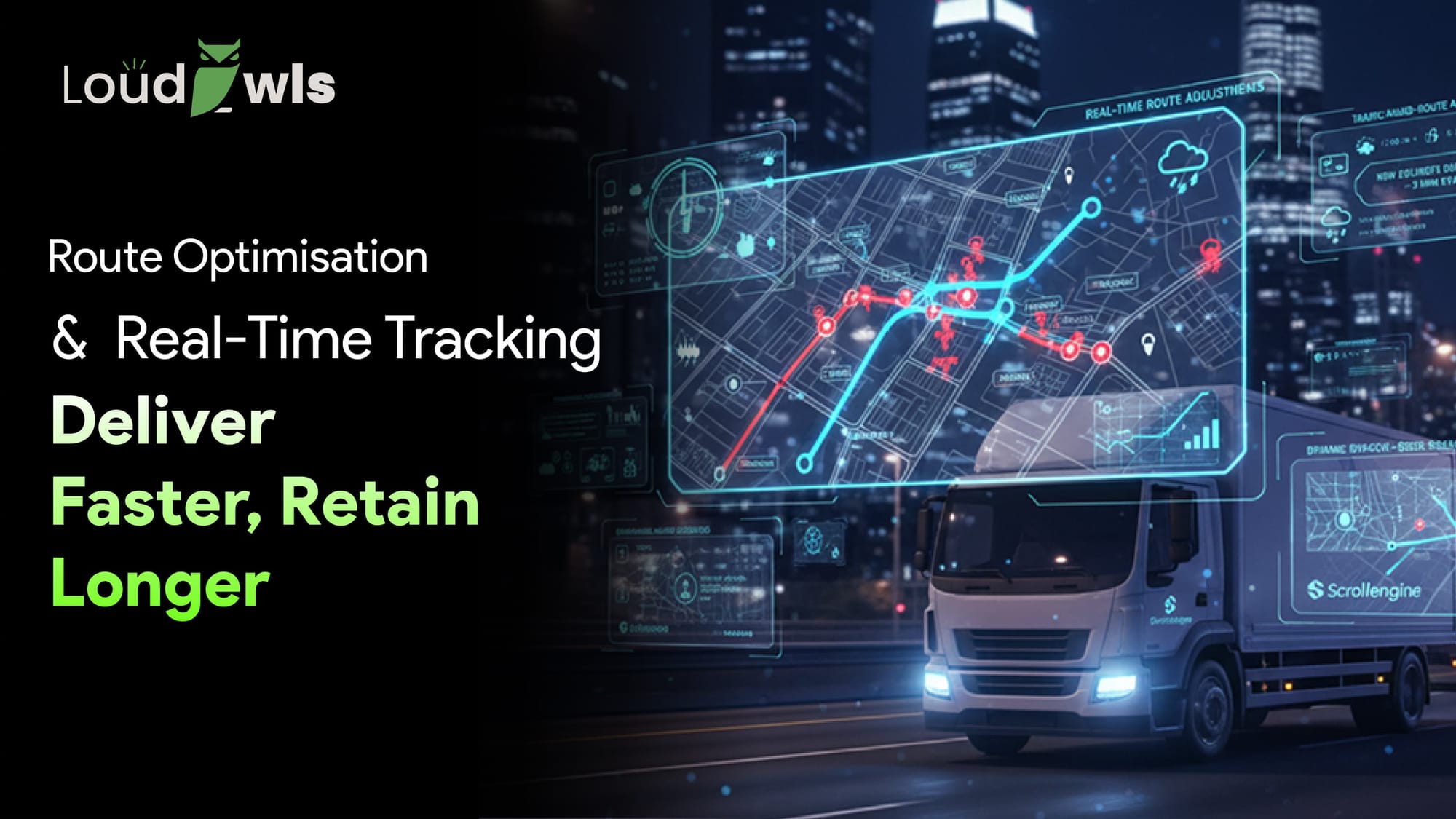
A customer places a food order at 7:14 PM and expects it by 7:44 PM. Everything that happens between those two points in time can help them decide to reorder next week or go to a competitor. The delivery window is not just a logistics problem but a retention problem.
Most food delivery platforms underestimate how directly route efficiency connects to repeat orders. According to data from UpperInc, drivers using optimised route planning complete 3 to 4 deliveries per hour compared to 2 per hour on manual routing. Reducing fuel cost is not the only benefit of that 50 percent efficiency gain. It reduces delivery times, increases on-time deliveries and provides customers with the customer experience that keeps them coming back.
This article breaks down the specific software features behind that improvement, what they cost to build, and why the technical decisions made at the logistics layer have a direct commercial impact on your platform's retention numbers.
Three years ago, it was possible to have a food delivery driver with only basic GPS tracking and manual driver assignment. There was no better way to get customers to wait 45 minutes for a vague estimate than to make them wait 45 minutes.
That tolerance is gone. Statista conducted a survey in 2024 and discovered that 90 percent of those who place orders use the internet to track them afterwards. Without live tracking, or if it's wrong, support ticket volumes grow and ratings decline and customers stop using the app and move to competitors . The logistics part is no longer behind the scenes for customers, but a product feature that they can see.
This is why investment in route optimization software development and real-time delivery tracking app development has moved from optional to essential for any platform serious about growth in 2026.
Route optimisation is not the same as navigation. Google Maps can give instructions to a driver to travel from A to B. A well-designed route optimization software engine is able to determine the order of a number of stops, factor in real-time traffic conditions, adjust in the event of an incoming order, and plan delivery sequences to minimize overall time on road for all drivers in the fleet.
Here are some of the things a well-constructed route optimisation system can manage at one time:
The difference between platforms that have this and those that do not shows up clearly in average delivery times and driver utilisation rates. A driver completing 2 deliveries per hour instead of 3.5 is not a staffing problem. It is a routing problem.
The tracking screen is the most-used feature in any food delivery app during an active order. Most users open it multiple times between placing an order and receiving it. What they see there directly shapes their perception of the platform.
A pin on a map that moves as the driver moves, updated every 10-15 seconds. This is the minimum level of service in 2026. Platforms without it are already behind. The technical requirement is a WebSocket connection between the driver app and the customer app, with position data pushed from the driver's device at regular intervals.
Having a static ETA at order placement is not sufficient. If the driver becomes stuck in the traffic, or completes a previous drop-off sooner than anticipated, the ETA is updated. This would need the backend to constantly update arrival time according to the current route progress and push it to the customer screen.
Push notifications at each stage: order confirmed, driver assigned, driver picked up, driver nearby, delivered. Each notification reduces the number of customers who open a support chat to ask where their order is. This directly lowers support costs and improves satisfaction scores without changing anything about the actual delivery.
Photo confirmation and digital signature capture are sent to the customer on delivery. This minimises conflict, avoids the platform taking the hit on late deliveries, and documents what has been received by the customer.
At scale, an AI dispatch management system can handle every incoming order, every driver position, every traffic signal, every zone demand pattern, and every order quickly, and pairs them with the correct driver in seconds, something a human dispatcher cannot achieve.
With manual dispatch, assigning a user to an order takes 2 to 4 minutes per order, delaying orders by the same amount for a platform with 300 orders per evening in a city.
Key capabilities to build into an AI dispatch module:
The most successful delivery businesses increasingly combine dispatch automation with route optimization software to improve efficiency across the entire logistics process.
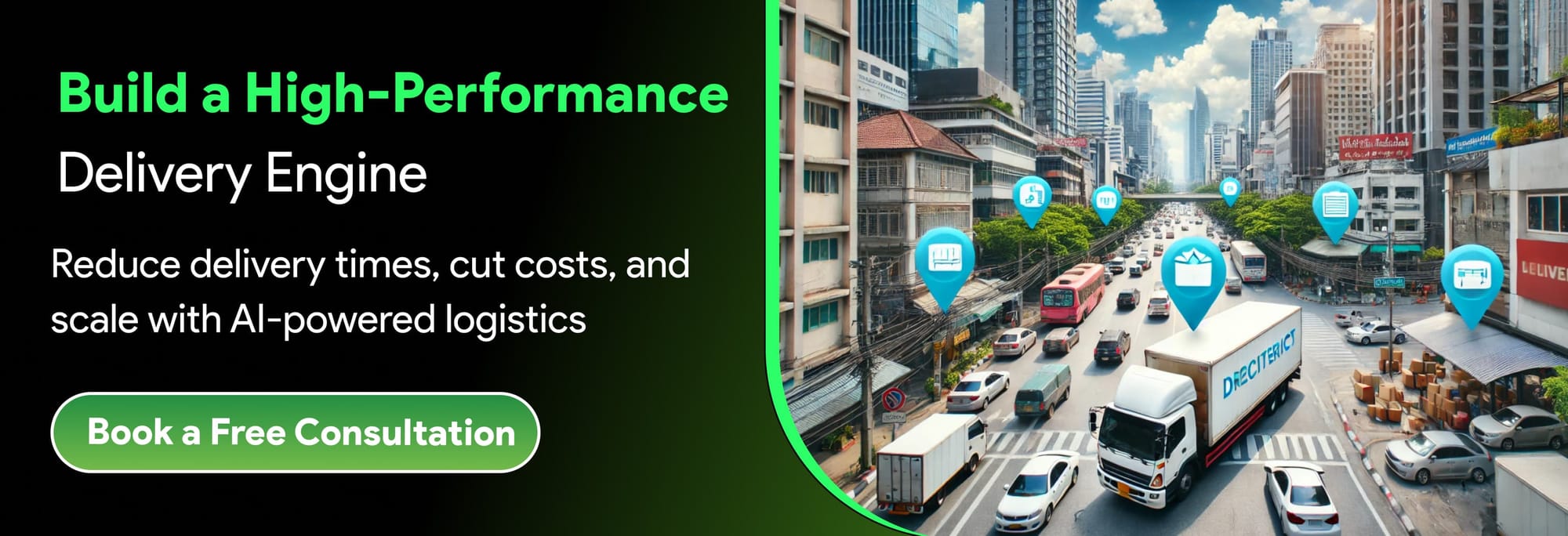
The customer-facing tracking experience is only as good as the driver-facing app feeding it. A food delivery driver app development project needs to handle several things that generic navigation apps do not.
For businesses considering route optimization software, integrating a proven routing API and building the tracking layer around it is often the most practical starting point. Custom AI routing becomes worth the investment once daily order volume crosses 500 to 1,000 orders consistently. Starting with APIs keeps costs low and lets you validate the product before committing to a full custom build.
The Third party routing API integration (Google maps, HERE or RouteXL) is available for $8,000 to $20,000 and it's the quickest starting point. A custom built AI route optimisation module from the ground up will cost between $40k and $80k and can be cost effective from 500 to 1000 orders a day.
The 90% of delivery customers follow up on their orders after purchase. Live ETAs and map tracking lower the number of support tickets, increase satisfaction, and boost repeat orders.
Yes. Route optimisation and tracking can be built as standalone microservices with REST APIs that connect into any existing codebase. No full platform rebuild is required. Most integrations of this type take 8 to 14 weeks, depending on the complexity of the existing system.
Route optimization software identifies faster routes and reduces delays, helping drivers complete more deliveries in less time.
Yes. Route optimization software improves grocery deliveries through efficient route planning, tracking, and driver allocation.
Small businesses can use route optimization software to improve delivery performance without having to manage large driver fleets.
The route optimization software and real-time tracking are not back-end infrastructure decisions. They are product decisions that show up in delivery times, driver efficiency, customer satisfaction scores, and repeat order rates. The platforms getting this right in 2026 are not necessarily the ones with the largest driver fleets. They are the ones with the smarter logistics layer underneath.
Building that layer does not require rebuilding everything at once. A routing API integration and a real-time tracking module can be added to an existing platform without a full rebuild, and the commercial impact shows up within the first month of operation. The question is not whether your platform needs this. It is how quickly you move on it before your competitors do.
LoudOwls builds AI-powered route optimisation and real-time delivery tracking apps that integrate with existing platforms or launch as part of a full new build. Whether you need a routing API integration in 8 weeks or a complete logistics platform in 5 months, the starting point is a 30-minute call. Talk to LoudOwls today and get an affordable consultation on your delivery logistics project.
Quick Summary * Building an AI app can cost anywhere from $15,000 to over $500
LoudOwls
Quick Summary * This blog explores the latest mobile app development trends re
LoudOwls
Key Takeaways ● A food delivery app like DoorDash typically costs $150,000
LoudOwls