AI app development cost
How Much Does It Cost to Build an AI App in 2026? A Complete Guide
Quick Summary * Building an AI app can cost anywhere from $15,000 to over $500


Ten years ago, the UAE was not the same place when it came to schools. School leaders have more complexity to deal with than the average enterprise team, not only between KHDA inspections and ADEK reporting cycles and the collection of fees, but also when parents want real-time updates on everything.
However, many schools in Dubai, Abu Dhabi, and Sharjah are still doing this in spreadsheets, on WhatsApp groups, and with three or four disjointed tools. The need for schools and effective School Management Software is the real problem. That problem is also what School Management Software and school management app development in the UAE are directly built to solve.
Most international SaaS platforms were built for Western markets. When a school in Dubai tries to use one, the friction becomes obvious quickly. Payment gateways do not support UAE NAPS. Reports are not in KHDA/ADEK format. Arabic is not a first-class language. Parent notifications go out via email when every parent in the country is on WhatsApp.
The UAE school system has its own structure. There are MOE-regulated government schools, KHDA-regulated private schools in Dubai, and ADEK-regulated schools in Abu Dhabi. Each authority has its own reporting requirements, and when they are not met, the consequences of non-compliance are real during inspection cycles.
A generic school ERP built for the US or UK market cannot account for this by default. What UAE schools actually need is School Management Software that treats compliance as a built-in function, not an add-on.
There are some manual registers that remain in school that have no need for them. A reliable School Management Software platform and student information system UAE are linked to biometric devices or QR scanners, and as the student is absent, the attendance is updated in real-time and an automatic notification is sent to the parent of the student.
This is not an option. UAE schools' app integration has noticed a substantial drop in unauthorized absences, as well as proxy records, at schools. Staff attendance is managed with a system that keeps track of the staff's shift, late arrivals and leave management without the need for a separate HR tool.
Email open rates for school communications average somewhere below 30 per cent. WhatsApp open rates are above 90. UAE parents are used to receiving updates through WhatsApp, and building parent communication software UAE around this behaviour is not optional if schools want engagement.
A well-built parent-teacher portal development project for the UAE includes:
The parent portal is the most visible part of any School Management Software platform. Schools that have active, well-designed parent modules consistently see faster staff adoption because parents start asking for updates that the staff then have a reason to enter.
Fee collection is one of the most administratively heavy parts of School Management Software operations. A fee management school app development project should handle installment plans, partial payments, sibling discounts, late penalties, and payment receipts without manual intervention.
In the UAE, payment processing needs to run through UAE NAPS-compliant gateways. Schools collecting fees online without proper payment infrastructure are also outside regulatory expectations. A custom-built platform handles this correctly from day one.
UAE Schools timetable scheduling software should take into consideration the Islamic studies periods, split gender classes in some schools, Arabic lessons, and curriculum changes in the middle of the year. These edge cases are not always addressed without a lot of manual workarounds with generic scheduling applications.
Good timetable logic inside School Management Software also connects to substitution. When a teacher is absent, the system should suggest available substitutes based on subject qualification and current schedule, not leave administrators to figure it out manually.
A grade book app UAE schools use daily needs to support both numeric and letter-grade formats, track formative and summative assessments separately, generate term report cards, and feed directly into the school's compliance reporting.
Data entered once should appear everywhere it is needed. Teachers entering grades should not also be updating a separate spreadsheet for the admin office. A modern School Management Software platform ensures that academic records remain centralized, accurate, and accessible.

Most schools do not calculate what fragmented operations actually cost them. The expense is not always visible on a budget sheet, but it shows up in other ways.
A finance team manually reconciling fee payments across a bank portal and a spreadsheet is spending time that a properly integrated system would handle in the background. A teacher copying grades from a notebook into three different places before a report card deadline is doing work the software should be doing. A front desk administrator fielding forty parent calls about bus arrival times is managing a problem that live GPS tracking solves in one step.
The hours add up. In a mid-sized UAE school with 600 to 800 students, administrative staff can spend anywhere between 15 and 20 hours a week on tasks that exist purely because systems do not talk to each other. That is not a staffing problem. That is a School Management Software problem.
Beyond the time, there is also the risk. When student data lives across multiple tools, some of which are personal devices and WhatsApp groups, the school has no real visibility into where that data sits or who has access to it. That is a compliance exposure that most schools are carrying without fully realising it.
A unified school admin platform, Dubai developer schools can actually rely on to remove these gaps at the operational level, not just on paper. This is exactly where School Management Software delivers measurable value.
Schools in Dubai operate under KHDA regulations. Schools in Abu Dhabi answer to ADEK. Regular inspections are carried out by both authorities and they make structured data outputs as part of those inspections.
School Management Software must generate reports that align with the frameworks KHDA uses, ranging from student enrolments and attendance to teacher qualifications and academic performance summaries.
If the software is not doing its job, it means schools must perform extensive manual work to prepare compliance reports before inspections. The right School Management Software treats regulatory output as a background function. Data entered during normal operations should automatically populate the reports inspectors ask for.
ADEK compliance covers Abu Dhabi schools and carries its own set of data requirements, particularly around student assessment records and school-wide performance tracking. School ERP ADEK compliance is not a checkbox. It is an ongoing operational requirement that the platform needs to be designed around.
The personal data, including student records, is regulated by UAE Federal Decree-Law No. 45 of 2021. For a School Management Software platform handling minor students, two things matter above everything else: where data is stored, and whether parental consent has been obtained for data processing.
Apps built on international cloud infrastructure with servers outside the UAE create legal exposure for schools. School Management Software built on UAE-hosted infrastructure helps keep all student data within the country and within the scope of local law.
This is not a technical preference. It is a compliance requirement that any serious parent communication software in the UAE or student information system must meet.

There are large international school ERP platforms with UAE clients. PowerSchool, Classter, and others have a presence in the market. But market presence does not mean a good fit. Schools that use these platforms may end up paying for things they don't need, and not paying for features that are available locally in the UAE.
Custom School Management Software created by a development company familiar with local regulatory requirements, parent communication expectations, and school infrastructure needs will always be more practical for day-to-day use.
The SIS integration UAE development market is also growing. Schools using Microsoft 365 or Google Workspace for Education increasingly require their School Management Software platform to connect seamlessly with SSO, calendars, and document storage. These can be accessed via standard APIs rather than relying on a vendor roadmap, which may or may not include UAE-specific requests.
A complete School Management Software build typically includes the following layers:
The school bus tracking app UAE component is increasingly requested alongside core modules. Live GPS tracking and estimated arrival times are becoming standard features within School Management Software, rather than optional extras.
The essential requirements include Arabic and English bilingual UI, KHDA/ADEK compliance reporting, WhatsApp/SMS integration with parents, and a structured gradebook, among others. Schools should not sign off on any platform that treats any of these as optional extras.
The UAE Federal Decree-Law No. 45 of 2021 concerns student records and other types of personal data. School apps should be hosted on UAE servers and have explicit parental consent for processing the personal data of minors.
Most frequently needed integrations are WhatsApp Business API for parent notifications, UAE NAPS for payment, national ID verification (where applicable), and Microsoft 365 or Google Workspace SSO.
School Management Software provides attendance alerts, grades, announcements, and direct communication through a centralized parent portal.
School Management Software improves communication, compliance, attendance tracking, fee collection, and overall efficiency in school administration.
Not all schools in the UAE that are doing this well are using the most expensive platforms. They are implementing School Management Software designed around the reality of UAE schools: operating in Arabic and English, communicating through WhatsApp, using local payment systems, and reporting efficiently without requiring dedicated administrative effort before inspections.

The technical decisions made during platform selection or development determine whether a school runs smoothly or spends administrative hours compensating for software gaps. For schools serious about getting this right, and for EdTech SaaS UAE B2B buyers evaluating vendor options, the question is not whether to move to a unified platform. The question is whether to adapt a foreign product or build something that fits from day one.
LoudOwls builds custom School Management Software for UAE clients, with native KHDA and ADEK compliance, WhatsApp Business API integration, UAE NAPS payment support, and UAE-hosted infrastructure. If your school or EdTech business needs a platform built for this market, get in touch with the LoudOwls team to discuss your requirements.

Quick Summary * Building an AI app can cost anywhere from $15,000 to over $500
LoudOwls

Quick Summary * This blog explores the latest mobile app development trends re
LoudOwls
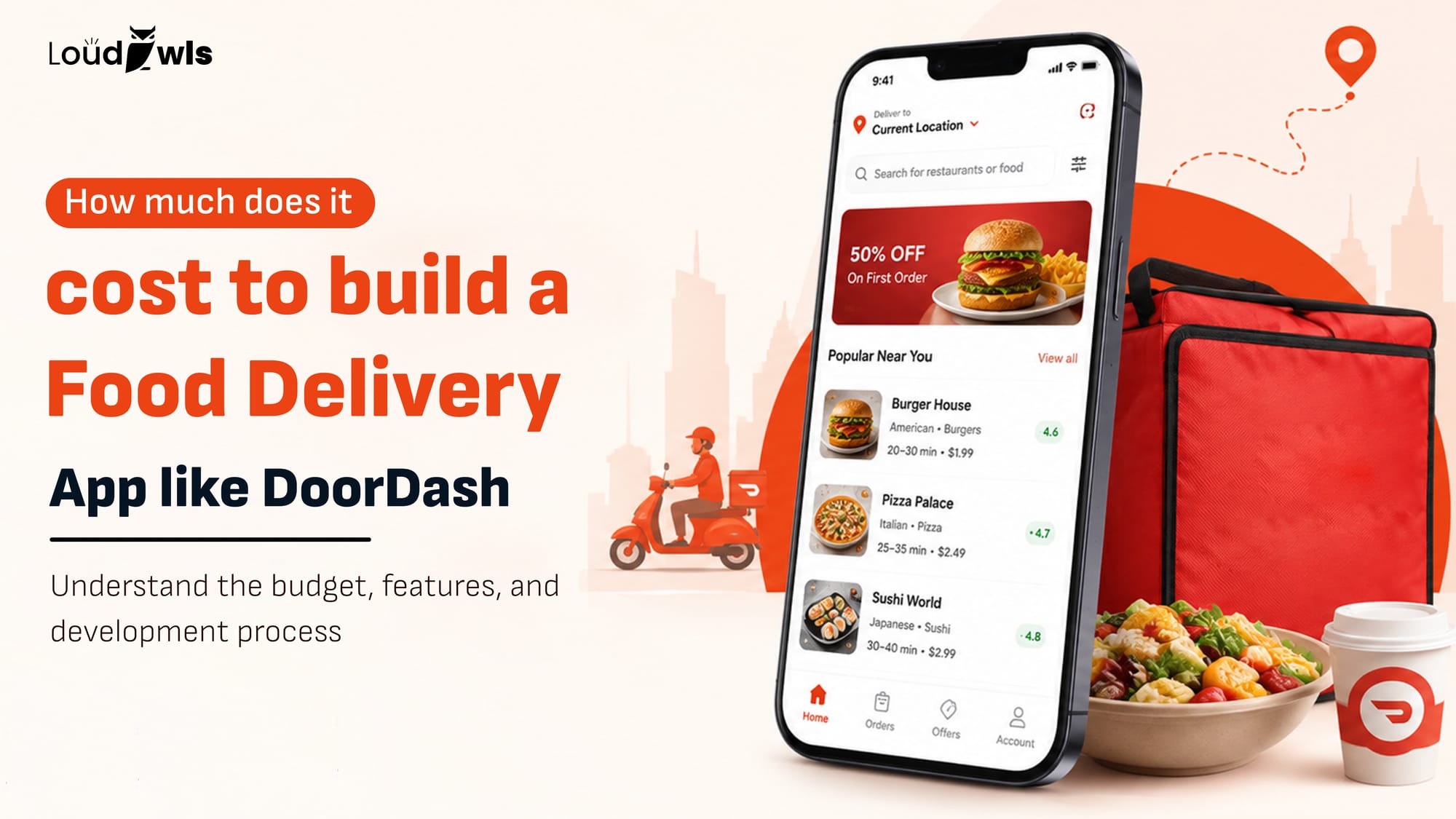
Key Takeaways ● A food delivery app like DoorDash typically costs $150,000
LoudOwls