AI app development cost
How Much Does It Cost to Build an AI App in 2026? A Complete Guide
Quick Summary * Building an AI app can cost anywhere from $15,000 to over $500
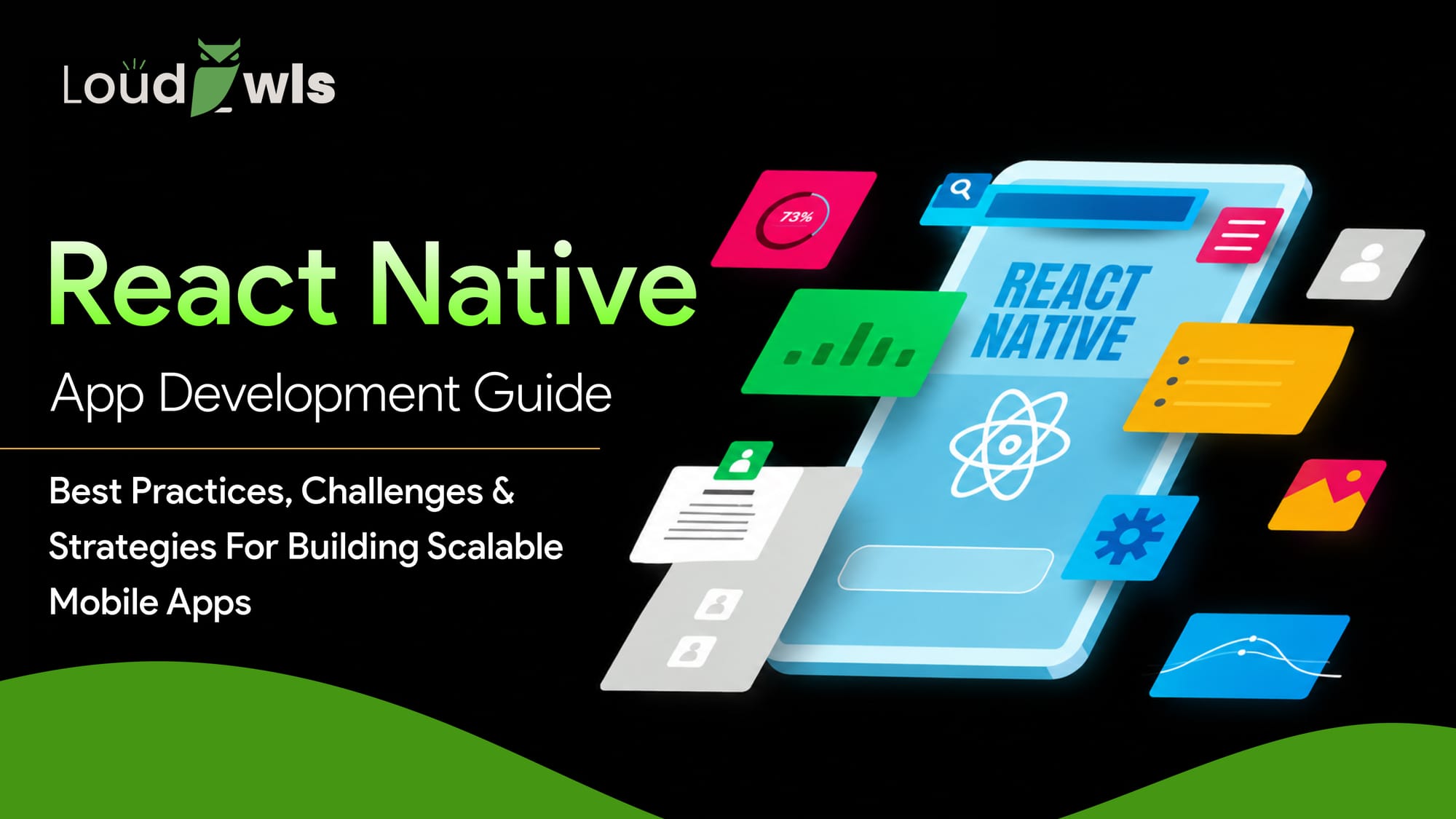

Most developers who start a React Native project are not caught off guard by the framework itself. But are caught off by what happens at scale. The layout looks clean in development. Navigation feels smooth. Then the app finally ships to real users and things start breaking when real users expose hidden issues. So, this guide explores those challenges in react native app development company and what experienced teams do to stay ahead.
The main idea remains the same. One codebase, two platforms, one team. For companies that cannot run separate iOS and Android pipelines, it has a genuine business advantage.
What has changed is the engine. The old bridge between JavaScript and native code was asynchronous and added overhead under heavy usage. The new architecture, built around JSI, Fabric, and TurboModules, replaced that with a synchronous interface. JavaScript now talks to native code directly. For teams building complex interfaces, that matters.
Partnering with a capable react native app development company can also compress timelines. Shipping cross-platform without parallel engineering teams is a real option in 2026.
Standard screens perform excellent. Problems start when you layer in real-time data, animations, or heavy computation while the interface is active. The JavaScript thread has limits.
Fixing this requires react native app development services who understand thread behavior below the component level. Tools like Reanimated 3 help, but knowing when to use them is a skill many teams underestimate.
Also Read: How Much Does It Cost to Develop an App in 2026?
Third-Party Libraries Break Without Warning
The ecosystem is community-driven. Some packages are excellent. Others look fine during vendor selection and break after an OS update mid-project. Teams that handle this well treat library selection as an architectural decision, checking maintainer activity, not just download counts.
One codebase does not mean identical behavior. Push notifications, permission flows, keyboard handling, and deep linking work differently across platforms. Test only on one and you will ship problems on the other.
Crashes at the boundary between JavaScript and native code are harder to trace than standard JS bugs. On older Android devices, these can take days to diagnose. Flipper helps. A team with native experience helps more.
A flat folder structure works for a prototype and collapses as the codebase grows. Before writing feature code, decide how concerns are separated. Business logic should not live inside components. State management should follow a predictable pattern. Teams that skip this pay for it when the codebase becomes too tangled to change.
Simulators do not replicate real conditions. Battery behavior, network pressure, and camera handling differ on physical hardware. If device testing is not in the sprint cycle from week one, risk piles up at launch where fixing things costs the most.
React Navigation works well when set up correctly from day one. Map your full screen flow before development begins, including deep link paths, and modal structures. Retrofitting this mid-project is expensive and avoidable.
Performance problems do not announce themselves during development. Use the Performance Monitor and tools like why-did-you-render throughout the build to catch re-renders and memory issues early.
When you need platform-specific functionality, write it as an isolated module with a clean JavaScript interface. Mixing native code throughout the codebase upgrades harder and slows new developer onboarding.
The technology is not as important as the team performing it. An excellent react native app development company identifies architectural risks early, poses the right questions before proposing solutions and provides documentation that is useful after handover.
In the case of a react development agency, ignore the tech stack pitch. Examine applications delivered to them. Ask about how they manage dependency, upgrades post-launch and what quality assurance comes across both platforms. Such responses demonstrate the way a team actually functions.
Looking for a React Native partner who has shipped real apps? Raise difficult questions promptly to a highly qualified team.
Also Read: Step-by-Step Guide to Building a Mobile App for Your Business
Q1. Is React Native ready to use in 2026?
Yes. It runs major products that serve millions of people a day. The framework is consistent. The difference is in the team supporting it and the decisions taken at the beginning of the project.
Q2. How do I choose between React Native and Flutter?
Both are strong. React Native is appropriate in the case of teams that operate on JavaScript and desire a large ecosystem. Flutter supports apps that have heavy custom graphics. React Native has a JavaScript team that markets faster, especially in most business apps.
Q3. What are the requirements of a react native app development company?
Search teams that pose tough questions prior to presenting solutions. Monitor their maintenance after launching since that is where inferior teams fail. Conversing with former customers speaks louder than case studies.
React Native in 2026 came to be reputed. The new architecture fulfills the promises of the previous ones. Severe cross-platform development without parallel teams is attainable.
The fact that the framework performs well does not ensure that all the projects constructed on it perform well. The difference between a clean demo and an application that can survive in the field is reduced to early decisions. Features come after architecture. Test on real hardware from day one.
Collaborate with a team that has deployed a real application of react native app development company. That is the beginning of good React Native development.

Quick Summary * Building an AI app can cost anywhere from $15,000 to over $500
LoudOwls
Quick Summary * This blog explores the latest mobile app development trends re
LoudOwls
Key Takeaways ● A food delivery app like DoorDash typically costs $150,000
LoudOwls